
Retirement Home or Long-Term Care Home? Ontario's Two Doors
This episode answers the Canadian version of the care decision using Ontario as the worked example — and says plainly that health care is provincial, so other provinces run the same two-door shape with different names, rates and queues.
The voices in this episode are AI-generated. The script was researched, written, and fact-checked by the seniorhelp.care team.
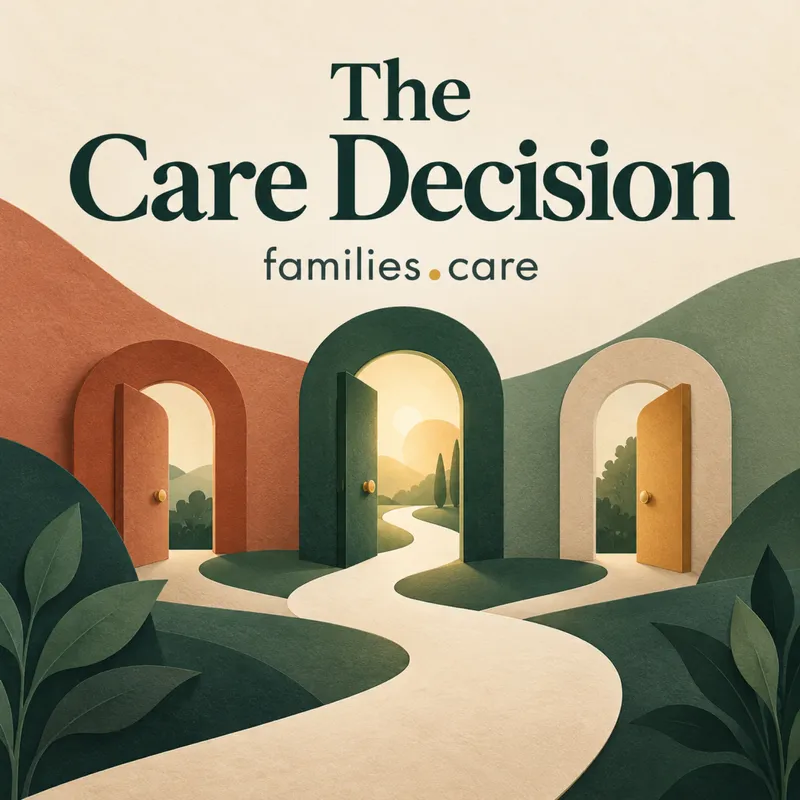
Retirement Home or Long-Term Care Home? Ontario's Two Doors
Stream the episode below, jump by chapter, or listen in your favorite podcast app.
Show notes
This episode answers the Canadian version of the care decision using Ontario as the worked example — and says plainly that health care is provincial, so other provinces run the same two-door shape with different names, rates and queues. The grounded facts, all from the Government of Ontario (ontario.ca): all applications and admissions to long-term care homes are arranged by Ontario Health atHome (1-833-515-1234) — you cannot apply to a home directly; Ontario Health atHome completes most of the application, and the family completes a choice form naming up to five homes in order of preference; when a bed is offered there are 24 hours to accept or reject and up to five days to move in, with charges starting on the move-in date. The province pays for nursing and personal care; the resident pays an accommodation co-payment whose maximum is set by the Ministry of Long-Term Care and is the same in every home — from July 1, 2026: $2,129.17 a month for basic, $2,567.17 for semi-private and $3,041.97 for private accommodation, with the same care provided whichever room is chosen. The Long-Term Care Rate Reduction Program can reduce the basic rate based on income (a single person with no deductions would likely qualify under $27,338 at the July 2026 rate) and must be re-applied for annually. Retirement homes are the other door: privately owned, private-pay, applied to directly, and licensed and regulated by the Retirement Homes Regulatory Authority (RHRA), whose public register lets families check a home's licence and inspection reports before signing.
Links from this episode
Full transcript (the recording script)
Production dialogue script reproduced verbatim, collapsed by default for easy scanning.
📖 Read verbatim Maya & Daniel dialogue (20 turns) Expand ↓
Maya: A quick note before we begin. This episode uses A I generated voices. The script was researched, written, and fact checked by the seniorhelp dot care team, and the figures in it come from official sources.
Daniel: Welcome to The Care Decision, the seniorhelp dot care podcast, where we take one real decision that families face with an aging parent, and we answer it all the way through. I am Daniel.
Maya: And I am Maya. Today's decision confuses more Canadian families than almost any other, because Ontario has two doors that sound like the same door. A retirement home, and a long term care home. They are not the same system, they are not paid for the same way, and you do not even apply to them the same way. One honesty note before we start: health care in Canada is provincial. This episode works through Ontario, in detail, because it is the example we can give you precisely. Other provinces run the same two door shape with different names, different rates, and different queues, and we will say so where it matters.
Daniel: Door one, then. The retirement home.
Maya: A retirement home in Ontario is private housing with services. It is privately owned, you pay the full cost yourself, the home sets its own prices and its own care packages, and you apply directly to the home, like renting an apartment with meals and help attached. Retirement homes are licensed and regulated by the Retirement Homes Regulatory Authority, the R H R A, under the Retirement Homes Act. And here is the check that takes two minutes: the RHRA keeps a public register. Before you sign anything, look the home up. Confirm it is licensed, and read its inspection reports. They are public for exactly this reason.
Daniel: Door two. The long term care home.
Maya: A long term care home is part of the public system, built for people who need a lot of daily help and access to twenty four hour nursing care. And the rule that surprises every family: you cannot apply to one directly. All applications and admissions to long term care homes in Ontario are arranged by one organization, Ontario Health atHome. You start by calling one eight three three, five one five, one two three four. A care coordinator assesses whether your parent is eligible, and Ontario Health atHome completes most of the application, usually at an in person meeting.
Daniel: What part does the family control?
Maya: The most important part. The choice form. Your family selects up to five long term care homes, in order of preference. That form is your one real lever in the public system, so it deserves real research: tour the homes before you rank them, and ask the care coordinator about wait times, because every home has a waiting list and they are not all the same length. Then, when a bed is offered, the clock is fast: you have twenty four hours to accept or reject the offer, and up to five days to move in. And know this before the offer comes: charges start on the move in date, whether or not your parent has physically arrived.
Daniel: Now the money, because this is where the two doors could not be more different.
Maya: In a long term care home, the province pays for the nursing and personal care. What your parent pays is an accommodation co payment, for the room and meals, and the maximum is set by the Ministry of Long Term Care. It is the same maximum in every home in Ontario, for profit or not for profit. From the first of July, twenty twenty six, the maximums are two thousand one hundred twenty nine dollars and seventeen cents a month for a basic room, two thousand five hundred sixty seven dollars and seventeen cents for semi private, and three thousand forty one dollars and ninety seven cents for private. And this matters: the care is the same whichever room you choose. You are paying for the room, not for better nursing.
Daniel: And if a parent cannot afford even the basic rate?
Maya: Then there is the Long Term Care Rate Reduction Program. It applies to basic accommodation only, and it is based on income. At the July twenty twenty six rate, the province says a single person with no deductions would likely qualify if their income is under twenty seven thousand three hundred thirty eight dollars. Two catches: semi private and private rooms are not eligible, and you must re apply every year. Compare all of that with door one: in a retirement home there is no set maximum, no rate reduction program, and no queue. You pay the market price, in full, starting the day you sign.
Daniel: So how does a family actually decide between the doors?
Maya: By the level of need, honestly assessed. If your parent is fairly independent, wants meals, community, and help on hand, and can pay privately, a retirement home fits, and it can also be the bridge: many families use one while a long term care application is in progress, because the public door has a waiting list and the private door does not. If your parent needs daily nursing level help, help with most activities of daily living, or supervision around the clock, that is what long term care homes exist for, and no retirement home package should be stretched to pretend otherwise. And the two doors connect: Ontario Health atHome also coordinates publicly funded home care, so one call can start a home care assessment and a long term care application at the same time.
Daniel: The checklist for Ontario families, then.
Maya: Step one: decide which door you are actually looking at, public long term care or private retirement home, and stop comparing them as if they were the same product. Step two: for long term care, call Ontario Health atHome on one eight three three, five one five, one two three four, and start the assessment early, because the waiting list is real. Step three: tour before you rank, and put real research into the five choices on the choice form. Step four: for any retirement home, check its licence and inspection reports on the RHRA public register before you sign. And step five: run the money both ways, the set provincial co payment, with a possible rate reduction, against the retirement home's full private price, including what happens when care needs grow.
Daniel: Our Ontario long term care guides, retirement home checklists, and care search are free at seniorhelp dot care. And if you are listening from another province, start with your provincial health authority: the doors have the same shape, but knock on your own province's.
Maya: That is The Care Decision. One real decision, answered all the way through. I am Maya.
Daniel: And I am Daniel. Know which door you are knocking on. Thanks for listening.
All Audio Episodes in This Series
Every episode answers one high-stakes senior care decision in under 20 minutes — jump directly to any part of the series below.
-
EPISODE 01 ⏱ 6:18 · Funding
Your Parent's Medicare Plan Is Ending. Now What?
Roughly 3.8 million people on Medicare are losing their current health plan for 2027 — insurers are leaving counties, ending contracts, or not renewing plans.
-
EPISODE 02 ⏱ 19:21 · Care types
What Does Memory Care Actually Cost?
There is no official national price for memory care.
-
EPISODE 03 ⏱ 10:09 · Funding
How Families Actually Pay for Assisted Living & Memory Care: The Six Doors
If the national median for assisted living is $6,200 a month and the average retired worker's Social Security check in 2026 is $2,071 a month, there is a $4,000+ monthly gap appearing on the kitchen table every 30 days.
-
EPISODE 04 ⏱ 10:19 · Hospital & rehab
The 48-Hour Hospital Discharge & CMS Five-Star Nursing Home Playbook
When a hospital discharge planner hands your family a list of five skilled nursing facilities on a Thursday afternoon with 48 hours to choose, panic sets in.
-
EPISODE 05 ⏱ 7:49 · Care types
Stay Home or Move? The Home Care vs. Assisted Living Decision
Episode Five answers the question that comes before every other episode in this series: not what a care setting costs, and not how to pay for it, but which setting — care brought into your parent's home, or a move to assisted living.
-
EPISODE 06 ⏱ 6:48 · Care types
¿Cuidar en casa o buscar una residencia? La decisión en familia
En este primer episodio en español de La Decisión del Cuidado, Maya y Daniel responden la decisión que enfrentan las familias en toda América Latina: seguir cuidando en casa, entre la familia y ayuda contratada, o buscar una residencia privada para adultos mayores.
-
EPISODE 07 ⏱ 7:12 · Care types
Choosing a Care Home in England: Check the Rating, Then Check Who Pays
This episode answers the care home decision for England in the order that protects families: assessment first, rating second, funding third, contract last.
-
EPISODE 08 ⏱ 6:19 · Care types
Home or Residential Care? Australia's New Aged Care System Starts With One Assessment
This episode answers Australia's version of the care decision — stay home with Support at Home, or move into residential aged care — inside the system that replaced the old one.
-
EPISODE 09 ⏱ 6:24 · Care types
Retirement Home or Long-Term Care Home? Ontario's Two Doors
This episode answers the Canadian version of the care decision using Ontario as the worked example — and says plainly that health care is provincial, so other provinces run the same two-door shape with different names, rates and queues.
🎧 Listening now · Episode 9
Was this episode helpful for your family’s decision?
Anonymous 1–5 star rating · Helps families find the clearest guides first.
Turn This Episode Into Your Local Plan
National averages only tell half the story. Check the exact figures, Medicaid waiver rules, and verified communities in your parent’s state and city.
Cost Calculator
Compare Local Care Costs by State & City
See CareScout 2025 assisted living medians and estimated memory care rates in your area.
Provider Directory
Search Verified Local Communities
Filter assisted living, memory care, and skilled nursing near your parent’s ZIP or city.
State & Federal Guides
Medicare, Medicaid & Care Checklists
Step-by-step written guides grounded in CMS rules and state Medicaid statutes.